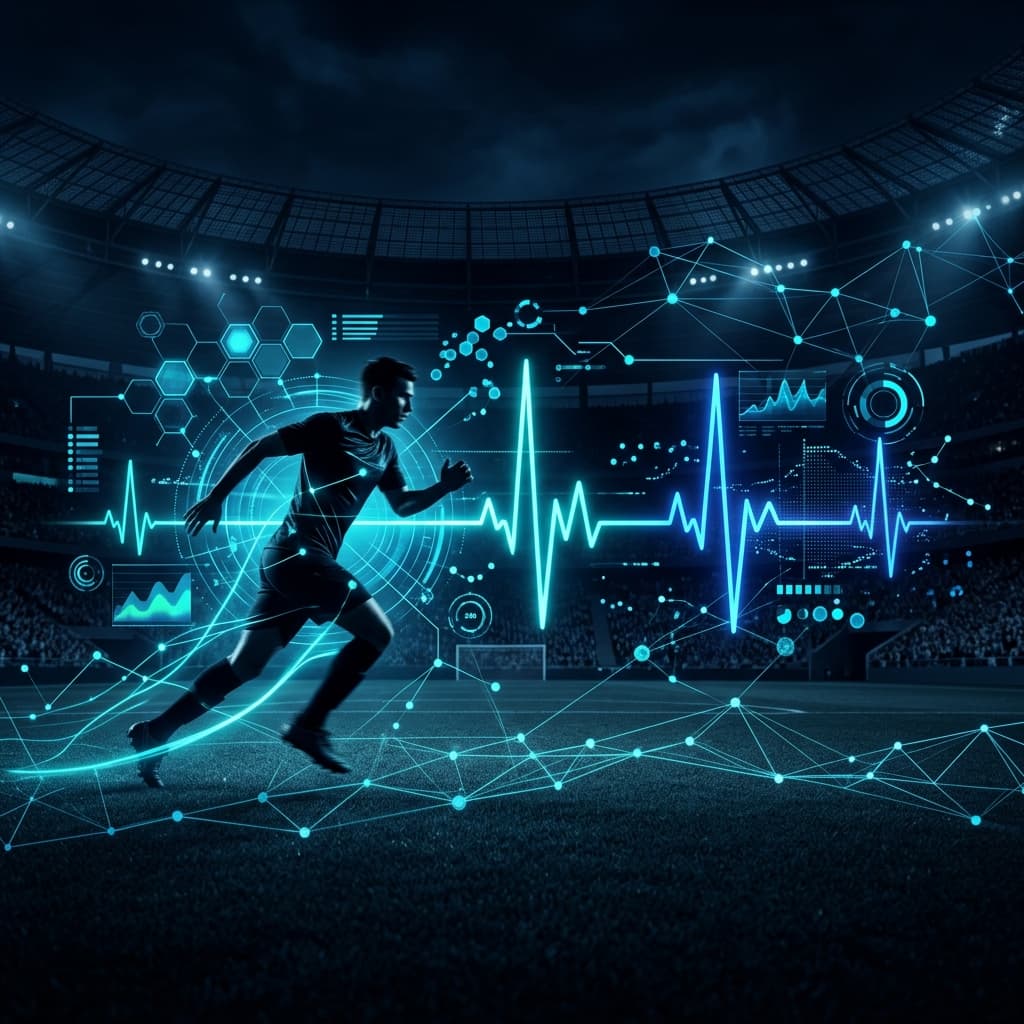
The landscape of football scouting and sports betting is undergoing a seismic shift. We've moved from post-match statistics to real-time tactical analysis. Now, we are entering the era of Real-Time Biometrics—a frontier where the physical state of a player is transmitted and analyzed in milliseconds.
While current betting markets rely heavily on macroscopic events (goals, corners, possession), the introduction of micro-biometric data could fundamentally alter how live odds are calculated and how predictive models operate.
The Biometric Revolution in Football
Modern football players are walking data hubs. With the advent of advanced wearable technology, smart fabrics, and even computer vision algorithms capable of detecting micro-expressions and fatigue levels from broadcast feeds, the volume of physical data being generated is unprecedented.
Key biometric data points include:
- Heart Rate Variability (HRV): A crucial indicator of real-time stress and fatigue.
- Core Body Temperature: Directly correlated with endurance and potential cramping.
- Muscle Load and Symmetry: Sensors in boots and socks can detect imbalances that precede muscle injuries or drops in sprint speed.
- Respiration Rate: Measured via smart vests to track aerobic threshold in real-time.
Currently, this data is heavily guarded by clubs and used strictly for medical and performance purposes. But what happens when (or if) this data becomes accessible to predictive markets?
The Shift in In-Play Betting
In-play (or live) betting relies on the assumption that the bookmaker (or the market, in decentralized platforms like Polymarket) has a slightly better understanding of the game's trajectory than the average punter. Biometrics would blow this wide open.
1. Predicting Substitutions and Injuries
Imagine an algorithm that detects a 15% drop in a striker's sprint speed alongside a spike in HRV. The model could predict a substitution within the next 5 minutes with 90% accuracy. Betting markets for "Next Player to be Substituted" or "Team to Score Next" would instantly adjust based on the physical decline of key defenders.
2. Penalty Kick Psychology
One of the most intense moments in football is the penalty kick. If live heart rate data were available, predictive models could correlate a player's resting heart rate versus their spike during the run-up, calculating the probability of a miss based on physiological anxiety.

3. Fatigue-Adjusted Expected Goals (xG)
Traditional xG models calculate the probability of a shot resulting in a goal based on position and angle. Biometric-Adjusted xG would factor in the shooter's current fatigue level. A shot from 20 yards has a different probability in the 10th minute compared to the 89th minute when the player's core temperature is peaking and lactic acid has accumulated.
The Challenge for Predictive Models
Integrating biometrics into models like the ones we build at FootINet isn't just about adding more variables; it's about handling micro-second volatility.
Traditional models update on discrete events (a pass, a foul). Biometric models must process continuous, noisy streams of time-series data. This requires:
- Edge Computing: Processing data closer to the source (the stadium) to reduce latency.
- Advanced Noise Filtering: Separating a heart rate spike caused by a sprint from a spike caused by psychological pressure.
- Ethical AI Frameworks: Ensuring that the analysis of human biological data complies with stringent privacy regulations and doesn't exploit athletes.
The Ethical Elephant in the Room
This brings us to the most critical hurdle: Privacy.
The commercialization of an athlete's biological data is a legal and ethical minefield. While OSINT (Open Source Intelligence) relies on publicly available information, biometrics are inherently private. For this data to enter the public domain or predictive markets, sweeping changes to player union agreements, broadcasting rights, and global privacy laws (like GDPR) would be required.
However, even if direct biometric feeds remain locked behind club doors, Proxy Biometrics—using AI computer vision to estimate fatigue, stress, and physical decline purely from video feeds—is already here, and it operates in a legal gray area.
Conclusion
We are standing at the precipice of the biometric era in sports analytics. Whether through direct sensor data or advanced computer vision proxies, the ability to quantify a player's physical and mental state in real-time will be the ultimate edge in both professional scouting and predictive markets.
At FootINet, we believe in pushing the boundaries of data analysis while strictly adhering to a Privacy-First philosophy. The future of intelligence isn't just about knowing what happened; it's about understanding the biological limits of what is about to happen.